

Land Acknowledgment: Payahuunadu has been, and continues to be, the homeland of the Paiute (Nuumu), Shoshone (Newe), and Timbisha peoples. This land acknowledgment honors the original inhabitants of the Eastern Sierra and the tribes who remain here today.
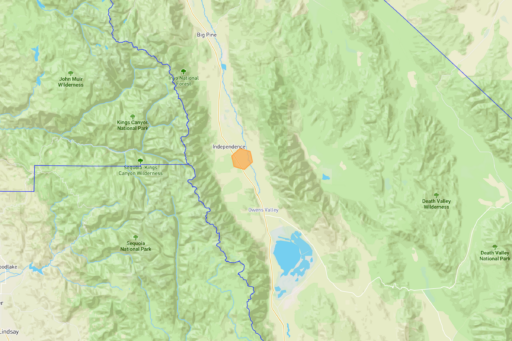
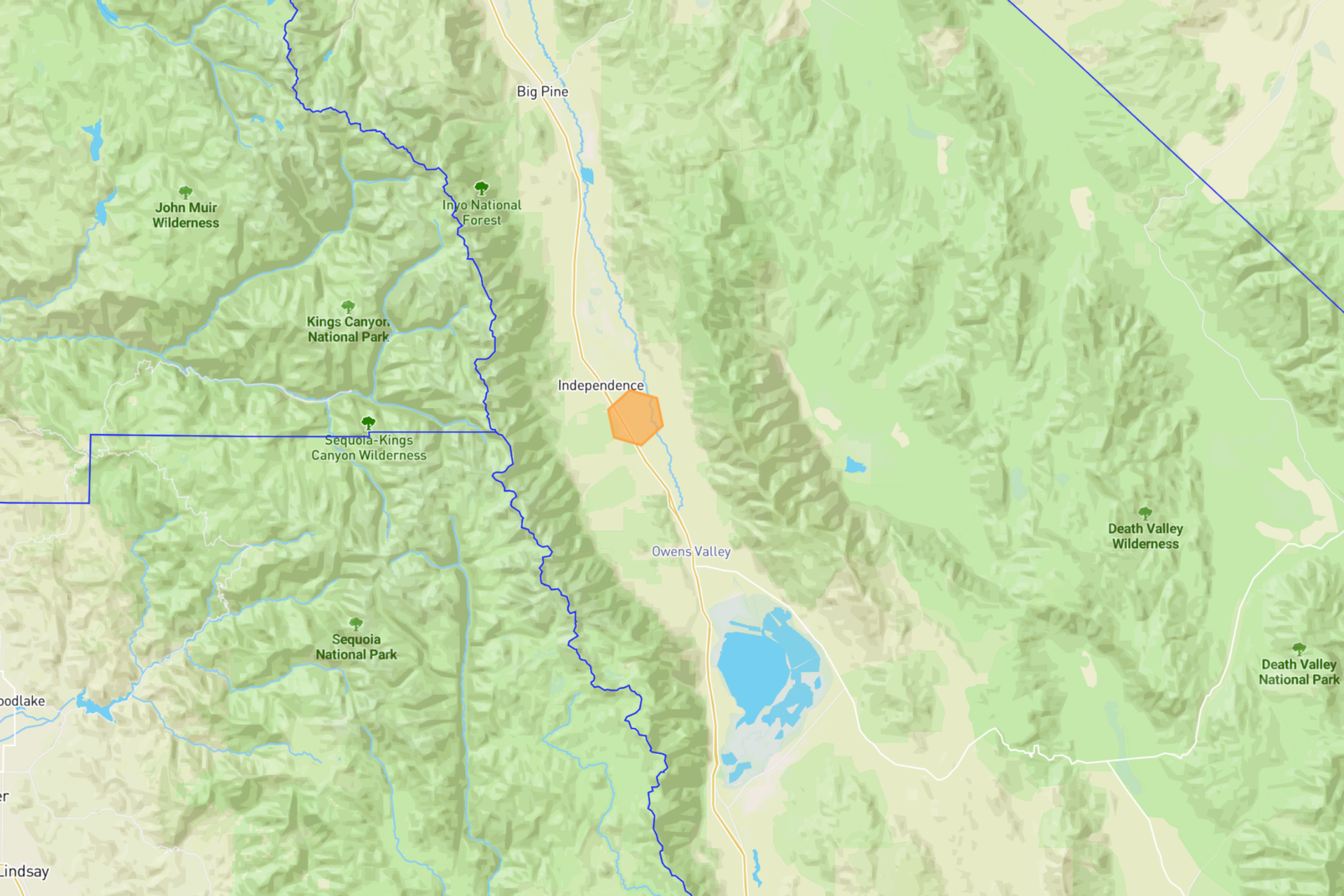
PSA: Don’t try to track the wolf. This data is delayed and not real-time movement.
According to the California Department of Fish and Wildlife (CDFW), a radio-collared gray wolf has been detected moving through parts of Inyo County, recently near Independence.
Depending on who you ask, this is either a conservation milestone or a rancher’s nightmare.
The wolf is part of California’s slowly re-establishing population, which began returning naturally from Oregon around 2011. No reintroduction program. No grand plan. Just wolves doing what wolves do, which is wander.
Why here?
Short answer: open land, prey, and corridors that connect to known wolf territory.
Longer answer: most of California’s wolf activity is still concentrated in the north, but young wolves, especially dispersing males, are known to travel hundreds of miles in search of territory. Inyo County sits right in that “you’re going to start seeing more of this” zone.
Ranchers: not stoked
Ranchers across Inyo County are raising legitimate concerns about livestock safety. Wolves are apex predators. The Eastern Sierra is a working landscape. People live here. Ranching is part of the economy. If they settle, livestock depredation becomes part of daily operations, not a hypothetical.
Under both state and federal protections, gray wolves are listed as endangered. That means:
- You cannot harm or kill a wolf
- Non-lethal deterrents are the primary tool
- Compensation exists for losses, but it takes time, documentation, and patience
CDFW offers funding for deterrents like range riders, fladry, and guard animals.
Conservation side: this is the plan working
From a wildlife perspective, this is exactly what recovery looks like.
Many conservation organizations have long pushed for wolf return as part of restoring ecosystem balance. Wolves can influence prey behavior, reduce overgrazing in certain systems, and trigger broader ecological effects.
What happens next?
Right now, the wolf appears to be passing through, not settling down. No confirmed pack, no den sites, no local wolf family starting a group chat.
CDFW is monitoring movement via collar data and field verification. If the wolf sticks around or others follow, expect:
- Increased monitoring
- More funding conversations around coexistence tools
- Public meetings where no one leaves fully satisfied
The bigger picture
California has a small but growing wolf population, mostly in the northern part of the state. Expansion south has always been expected.
Now it’s happening.
If you see it
- Do not approach
- Do not try to track it
- Do not feed it
- Give it space and let it move through
The fastest way to turn a rare wildlife moment into a management problem is human interference.