

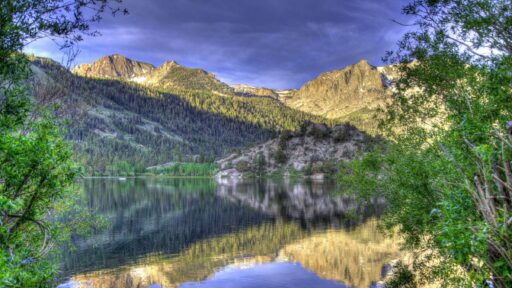
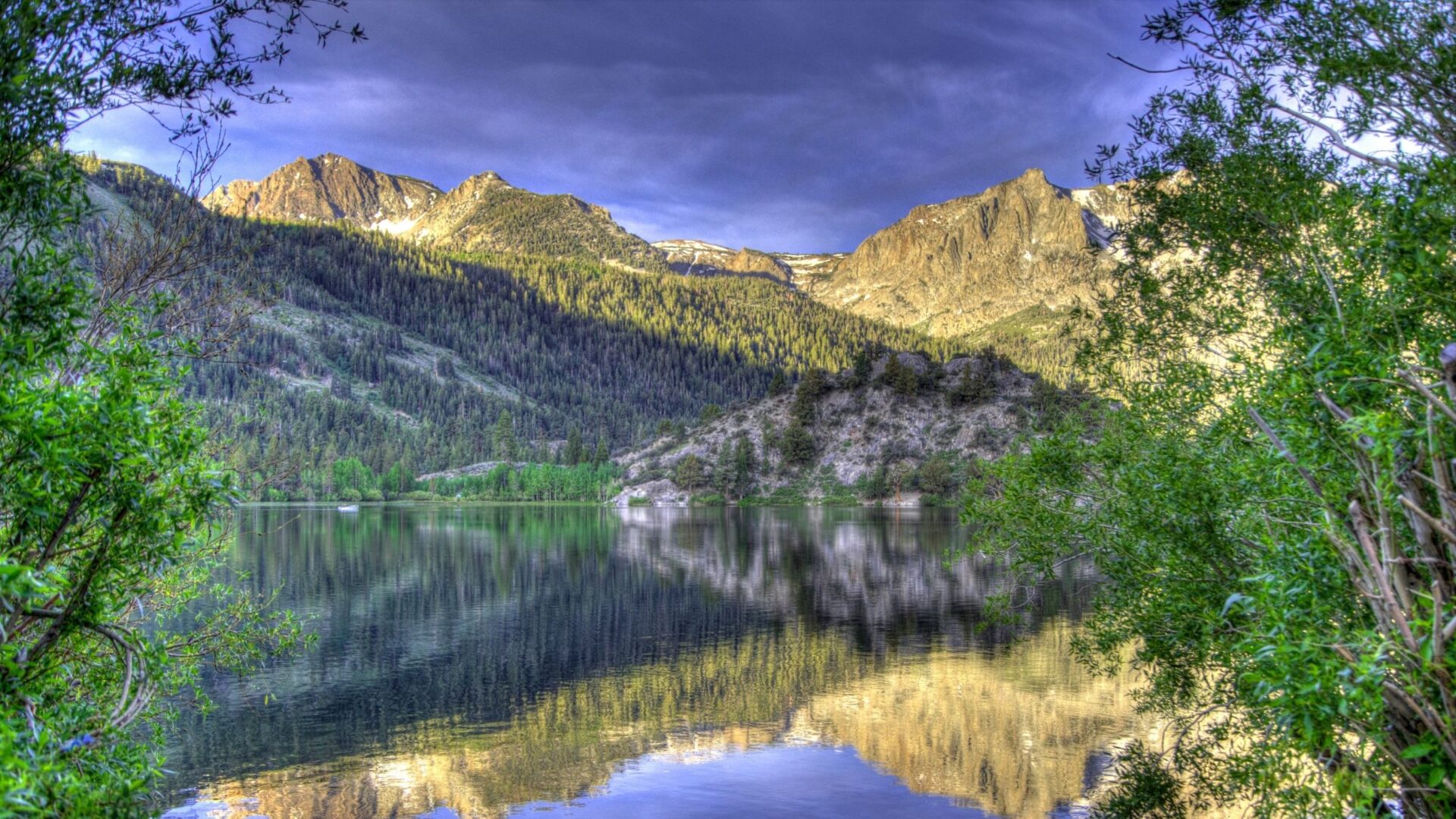

June Lake and Lee Vining sit less than twenty miles apart, connected by Highway 395, Mono Lake, and Yosemite’s eastern entrance. They share the same mountains, but their stories are very different.
June Lake grew around fishing, recreation, and mountain tourism. Lee Vining grew beside one of the oldest lakes in North America, shaped by volcanic forces, Indigenous history, conservation battles, and its role as a gateway to Yosemite.
Together, they tell much of the story of the Mono Basin and the Eastern Sierra.
The First People of the Mono Basin
Long before roads, lodges, or fishing resorts, the Mono Basin was home to the Kutzadika’a, a distinct group of Northern Paiute people whose name translates to “eaters of the brine fly pupae.”
For generations, the Kutzadika’a gathered food from Mono Lake, hunted throughout the region, and maintained trade routes across the Sierra Nevada. Obsidian from the Mono Craters became an important trade commodity and can still be found throughout archaeological sites across California and the Great Basin.
The Kutzadika’a remain connected to the Mono Basin today and continue to play an important role in preserving the region’s cultural history.
June Lake: A Community Built Around Water
The story of June Lake begins with glaciers.
Over thousands of years, massive glaciers carved the valleys and basins that became June Lake, Gull Lake, Silver Lake, and Grant Lake. The lakes, mountains, and forests that define the June Lake Loop today are direct results of that geologic history.
For much of the nineteenth century, the area remained relatively isolated. Ranching occurred throughout the region, but access remained limited and seasonal.
That began to change in the early 1900s.
The June Lake Loop
The June Lake Loop is the reason June Lake exists as a destination.
The road’s history begins around 1915 when Southern California Edison began developing the Rush Creek Hydroelectric System. Roads were built to access dams, reservoirs, powerhouses, and construction sites throughout the basin.
As automobile travel expanded during the 1920s, those same roads opened the area to recreation and tourism.
The June Lake Post Office was established in 1927.
The historic Heidelberg Inn opened in 1928.
Fishing camps, lodges, cabins, and campgrounds soon followed.
What began as infrastructure supporting hydropower became one of California’s classic mountain road trips.
Today, the sixteen-mile Loop remains the heart of the community, connecting June Lake, Gull Lake, Silver Lake, and Grant Lake beneath the Sierra crest.
Fishing and the Resort Era
By the 1920s and 1930s, June Lake had become a destination for anglers traveling north from Los Angeles.
Fishing reports appeared in newspapers. Resorts advertised cool mountain temperatures and trout-filled lakes. Families began making annual pilgrimages to the Eastern Sierra, often returning to the same cabins year after year.
Many of the traditions that define June Lake today trace directly back to this era.
Fishing opener remains one of the most anticipated weekends of the year.
June Mountain Opens
A major turning point arrived in 1961.
That year, ski pioneer Dave McCoy opened June Mountain, expanding the community beyond its summer fishing roots.
McCoy had already established Mammoth Mountain as a growing ski destination, but June developed a different identity. Families learned to ski here. Local kids grew up on the mountain. Visitors returned season after season.
While Mammoth evolved into an international resort destination, June Mountain remained known for shorter lift lines, approachable terrain, and a relaxed atmosphere.
More than sixty years later, it remains one of California’s most beloved ski areas.
Carson Peak
Rising above the June Lake Loop, Carson Peak has become the defining landmark of the community.
Named after frontiersman Kit Carson, the 10,908-foot summit dominates the skyline and appears in countless photographs, paintings, postcards, and social media posts each year.
Whether viewed from June Lake, Silver Lake, or the surrounding trail system, Carson Peak remains one of the most recognizable mountains in the Eastern Sierra.
Lee Vining and Mono Lake
North of June Lake, the landscape changes dramatically.
Forests give way to sagebrush. The Sierra Nevada drops into the Mono Basin. Mono Lake appears on the horizon.
At more than one million years old, Mono Lake is among the oldest lakes in North America. Unlike most lakes, it has no outlet. Minerals accumulate over time, creating the alkaline water that supports its unique ecosystem.
The lake’s tufa towers, volcanic islands, and bird populations have made it one of California’s most studied and photographed landscapes.
The Mono Craters
South of Lee Vining, the Mono Craters rise above the basin.
These volcanic domes formed through eruptions over the past several hundred thousand years, making them among the youngest volcanic features in California. The obsidian they produced became a valuable resource for Indigenous peoples throughout the region.
Today, the craters remain one of the defining geologic features of the Mono Basin.
Tioga Pass and Yosemite
Lee Vining’s modern identity is closely tied to Yosemite National Park.
Tioga Pass became an important route during the mining era, connecting communities on both sides of the Sierra Nevada. The Tioga Road later became part of Yosemite National Park and remains the highest highway pass in California, reaching nearly 10,000 feet.
Each summer, visitors from around the world pass through Lee Vining on their way into Yosemite.
Many stop for a meal.
Some stay longer.
Saving Mono Lake
One of California’s most important environmental victories began here.
In 1941, Los Angeles began diverting water from streams that fed Mono Lake. Over the following decades, lake levels dropped dramatically, exposing shorelines and threatening wildlife habitat.
In 1978, the Mono Lake Committee formed to advocate for the lake’s protection.
The legal battle that followed became one of the most significant environmental cases in California history. In 1994, the State Water Resources Control Board ordered water diversions reduced and established protections designed to restore Mono Lake.
The lake visitors see today exists because of those efforts.
A Landscape That Continues to Shape People
Fishing cabins, ski lifts, volcanic craters, tufa towers, mountain passes, and alpine lakes all tell part of the story.
June Lake and Lee Vining developed differently, but both remain deeply connected to the landscape around them. The mountains, water, and geology continue to shape how people live, work, and travel here just as they have for generations.


