



June Lake and Lee Vining sit at the gateway to some of the best hiking in the Sierra Nevada.
Within a short drive, hikers can explore alpine lakes, volcanic landscapes, high mountain passes, waterfalls, ancient shorelines, and some of the highest peaks in Yosemite National Park. Some trails begin beside Mono Lake. Others climb into the heart of the Sierra. A few manage to do both.
Whether you’re looking for an easy walk or an all-day adventure, these are some of the best hikes in the June Lake and Lee Vining area.
June Lake
Parker Lake (4 Miles)
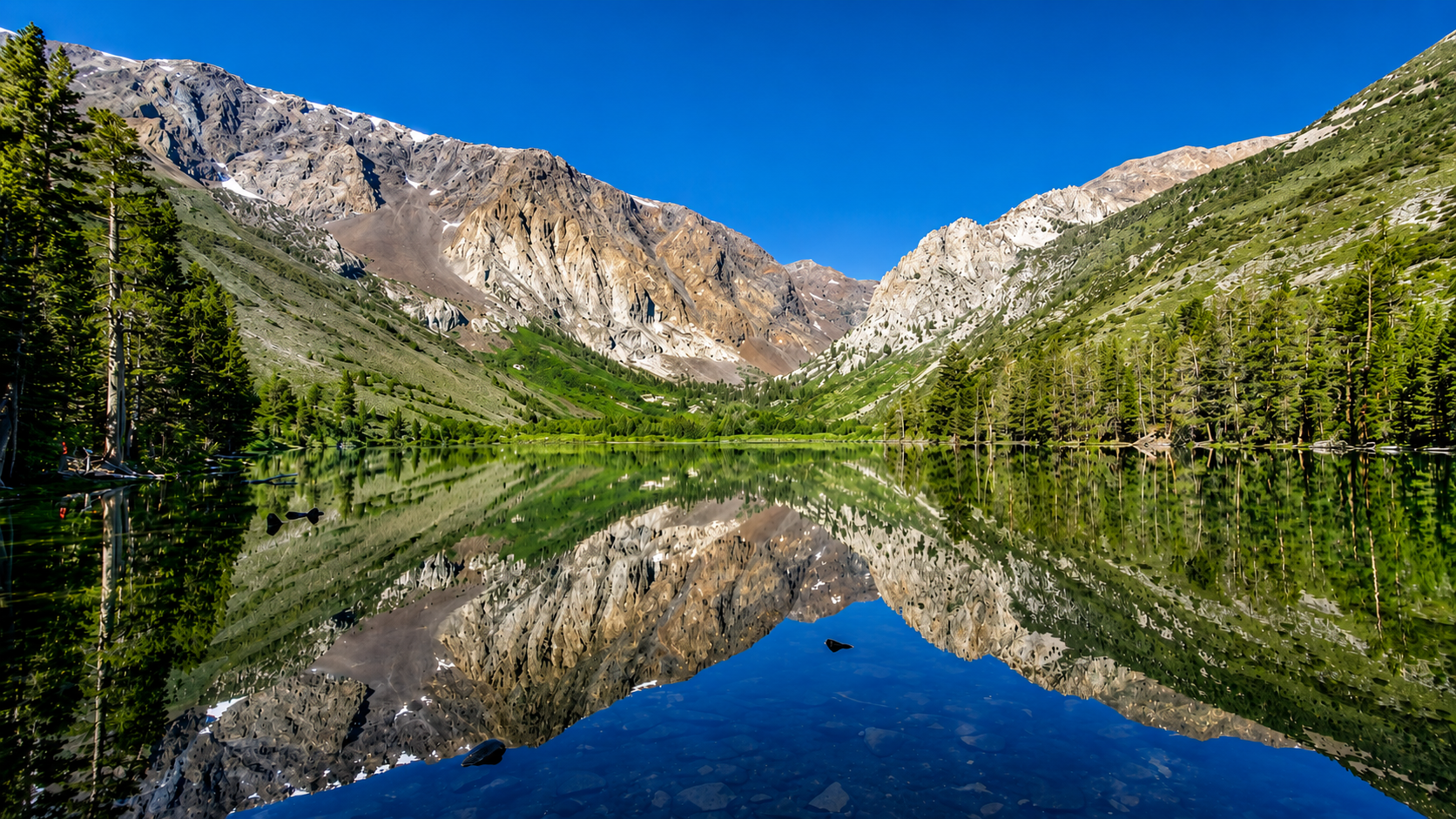
If you’re only going to do one hike near June Lake, Parker Lake makes a strong case for being the choice.
The trail climbs gradually through open sagebrush and pine forest before arriving at a beautiful alpine lake tucked beneath the Sierra crest. The views of Parker Peak and the surrounding mountains are outstanding, especially in the morning.
Gem Lakes (7 Miles)
One of the classic June Lake hikes.
The trail follows Rush Creek past waterfalls and granite cliffs before reaching Gem Lake. Strong hikers can continue deeper into the Ansel Adams Wilderness toward Agnew Lake, Waugh Lake, and beyond.
Lundy Canyon (5 Miles)
Part history lesson, part fall color destination, part mountain hike.
The trail follows Lundy Creek through meadows, aspen groves, and the remains of old mining camps before reaching a series of waterfalls and alpine scenery. Autumn transforms the canyon into one of California’s premier fall color destinations.
June Lake
Mount Dana (6 Miles)
At 13,061 feet, Mount Dana is one of the highest peaks in Yosemite National Park and one of the most rewarding day hikes in the Sierra.
The trail begins near Tioga Pass and climbs steadily to the summit, offering expansive views of Mono Lake, Yosemite, the Mono Basin, and the surrounding Sierra crest.
The altitude is no joke.
Gaylor Lakes (3 Miles)
One of the best effort-to-reward hikes anywhere along Tioga Pass.
Starting near Tioga Pass Entrance Station, the trail climbs quickly to a series of alpine lakes surrounded by granite peaks and open tundra. Along the way, hikers pass the ruins of the historic Great Sierra Mine.
Saddlebag Lake & Twenty Lakes Basin (6-8 Miles)
Twenty Lakes Basin feels like a highlight reel of the High Sierra.
Granite peaks, alpine lakes, wildflowers, and wide-open mountain views appear around nearly every corner. Many hikers use the water taxi across Saddlebag Lake to shorten the route, though walking the shoreline is equally rewarding.
Mono Pass Trail (8 Miles)
Beginning near Tioga Pass, Mono Pass follows an ancient route once used by Indigenous peoples traveling between the Sierra Nevada and the Great Basin.
Today, hikers follow the same corridor through alpine meadows, historic mining areas, and sweeping mountain scenery.
South Tufa Trail (.8 Mile)
Not every great hike requires climbing a mountain.
The South Tufa Trail offers an easy walk among the limestone towers that have made Mono Lake famous. Sunrise and sunset are particularly memorable, when the tufa formations catch the changing light and the lake becomes a mirror for the surrounding mountains.
Thousand Island Lake
Agnew Meadows serves as a gateway to some of the most famous trails in the Sierra Nevada.
From here, hikers can access Shadow Lake, Ediza Lake, Thousand Island Lake, Garnet Lake, and countless routes within the Ansel Adams Wilderness. Whether you’re looking for a day hike or a backpacking trip, this trailhead deserves a spot on your list.
Crater Mountain
The Mono Craters rise above Mono Lake like something from another planet.
These volcanic domes were formed by eruptions that helped shape the Mono Basin and continue to define the landscape today. Several informal trails and routes provide opportunities to explore the area while gaining a better understanding of the region’s geology.
A Landscape Built for Hiking
Few places in California offer such a variety of trails within such a small area.
One day you can stand among the tufa towers of Mono Lake. The next you can be hiking beneath 13,000-foot peaks, wandering through an aspen-filled canyon, or exploring a chain of alpine lakes tucked beneath the Sierra crest.
The hardest part is deciding where to start.


