

1926–2026
Lee Vining is the heart of the Eastern Sierra—a welcoming mountain community surrounded by some of California’s most extraordinary landscapes. Set beneath the towering Sierra, the town is the scenic eastern gateway to Yosemite National Park and an ideal home base for exploring Mono Lake, historic Bodie, Lundy Canyon, and the wonders of the Mono Basin.
In 2026, Lee Vining celebrates its centennial: 100 years as a town and thousands of years of human history in this remarkable place.
The First People of the Mono Basin
Long before Lee Vining appeared on a map, the Kootzaduka’a Paiute called the Mono Basin home. They moved with the seasons, gathering plants, hunting, fishing, and harvesting alkali fly pupae from Mono Lake. During the summer, families traveled into the mountain meadows west of the lake and sometimes crossed the Sierra into Yosemite.
The Kootzaduka’a developed a deep knowledge of this high-desert environment and created a rich cultural tradition that included exceptional basketry. Their descendants continue to live in the region today, maintaining an enduring relationship with these lands and waters.
The Man Behind the Name
Lee Vining takes its name from Leroy Vining, a miner who first came to the region with his brother Richard in 1852. Leroy later returned to the Eastern Sierra during the early years of the region’s mining boom.
By 1860, he had established a sawmill and ranch beside the creek that would eventually bear his name. His ranch reportedly grew fresh vegetables for miners and offered accommodations to travelers passing through the area.
Leroy Vining later disappeared in the Sierra. His body was never found, but his name became permanently connected to the creek, canyon, and town.
Mining, Ranching, and Early Settlement
Gold discoveries transformed the Eastern Sierra during the second half of the 19th century. Mining camps developed at Mono Diggings, Lundy, Bennettville, and in the hills overlooking Mono Lake. North of the basin, Bodie became the region’s greatest mining success, reaching a population of approximately 8,000 during its peak years of 1879 to 1881.
These mining communities created opportunities beyond the mines. Ranchers and farmers settled in the Mono Basin to provide food, livestock, and other necessities. Local families raised cattle and grew vegetables despite the high elevation, cold winters, and short growing season.
The surrounding forests also supplied timber and firewood. Mono Mills processed lumber that traveled across Mono Lake by steamship and then continued by wagon. Beginning in 1882, the Bodie and Benton Railway carried timber along the lake’s eastern shore to Bodie.
Together, mining, ranching, transportation, and travel laid the foundation for permanent communities in the Mono Basin.
The Founding of Leevining
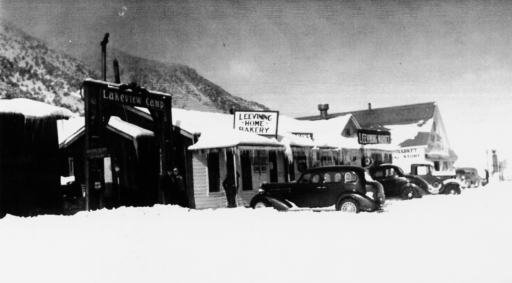
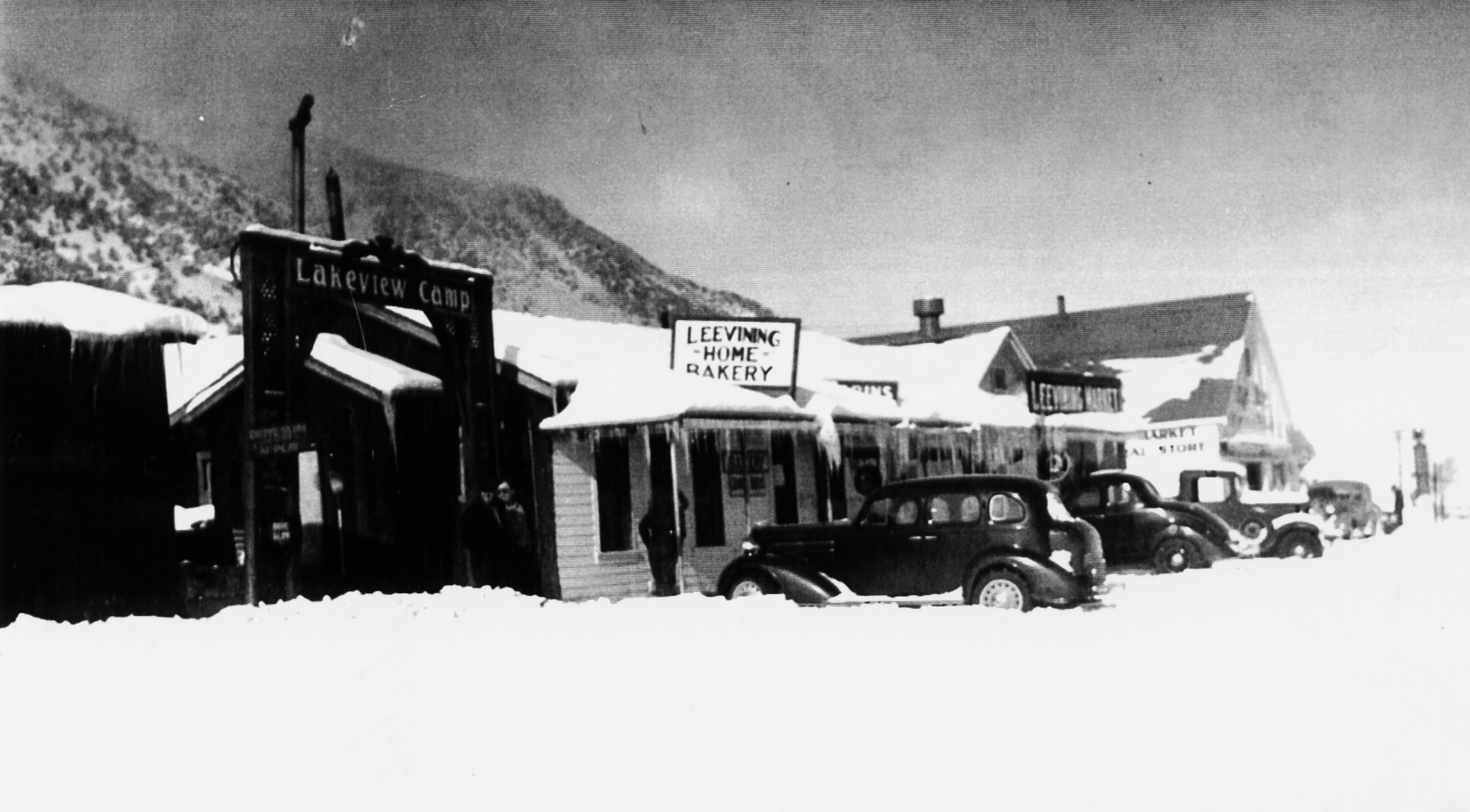
In 1926, local rancher Chris Mattly founded a new community near Lee Vining Creek. Originally written as one word—Leevining—the settlement occupied a natural crossroads at the foot of the Sierra Nevada.
Mountain passes had guided people across the Sierra for generations. As automobile travel increased, Lee Vining became an important stopping place for visitors, workers, and residents. Stores, gas stations, garages, restaurants, bars, motels, and other businesses opened to serve the growing number of travelers.
The Mono Inn, located north of town on the western shore of Mono Lake, became a popular destination during the 1920s and 1930s. Its annual Mark Twain Days celebration featured boat races, baseball games, contests, and community festivities. The inn also operated sightseeing tours on Mono Lake during the first half of the 20th century.
A Boom at the Western Portal
Lee Vining experienced another period of rapid growth between 1934 and 1941, when workers arrived to construct an extension of the Los Angeles Aqueduct system.
West Portal, near Lee Vining, was one of four construction camps supporting the enormous project. Workers bored an approximately 11-mile tunnel beneath the Mono Craters to carry water from Mono Basin streams toward the aqueduct.
The construction years brought new residents, businesses, and activity to Lee Vining and nearby June Lake. They also began a new chapter in the region’s history—one that would eventually place Mono Lake at the center of a nationally significant environmental movement.
Becoming Lee Vining
In 1957, the town’s name officially changed from the single word “Leevining” to the two-word spelling used today: Lee Vining.
The community continued to welcome generations of travelers drawn to Yosemite, Mono Lake, Bodie, and the Eastern Sierra. Although small in population, Lee Vining became an important center for tourism, education, conservation, and community life.
The Campaign to Save Mono Lake
Water diversions caused Mono Lake to fall dramatically during the 20th century, increasing its salinity and threatening its unique ecosystem.
The Mono Lake Committee was founded in Lee Vining in 1978 to protect the lake. After years of public education, scientific research, legal action, and community advocacy, California amended Los Angeles’ water rights in 1994. The landmark decision reduced diversions and established protections for Mono Lake and its tributary streams.
The effort earned national and international recognition, making Lee Vining the center of one of America’s most influential environmental stories.
The Mono Basin History Museum
The Mono Basin History Museum is located in the old Mono Lake schoolhouse at the south end of Hess Community Park in Lee Vining. The museum showcases artifacts, furniture, maps, equipment, and photographs chronicling the cultural history of the Mono Basin.
Inside, exhibits share the history of the local Kootzaduka’a Paiute, regional gold mining, Mono Basin homesteads and ranches, early schools and resorts, and the town of Lee Vining. Visitors can see historic household objects, baskets, business memorabilia, mining equipment, maps, boating artifacts, and other reminders of daily life in the Mono Basin.
Outdoor exhibits include Nellie Bly O’Bryan’s world-famous Upside-Down House, along with historic farming and mining equipment.
Learn more about the Upside-Down House and outdoor exhibits.
Lee Vining Today
Today, Lee Vining remains a community at the crossroads—where the Sierra Nevada meets the Great Basin, where desert meets alpine country, and where history meets the present.
Visitors come to see Mono Lake’s otherworldly tufa towers, explore the preserved streets of Bodie, hike beneath the peaks of Lundy Canyon, and travel across Tioga Pass into Yosemite National Park. They also discover a town shaped by Indigenous heritage, mining, ranching, transportation, tourism, conservation, and generations of community life.
Celebrating Lee Vining’s Centennial
On August 29th, 2026, Lee Vining celebrates 100 years. The Centennial brings residents, former residents, families, friends, and visitors together to honor the people and stories that have shaped the community since its founding in 1926.
Centennial activities celebrate Lee Vining’s Indigenous heritage, historic businesses, schools, ranching families, community organizations, and enduring role as the heart of the Eastern Sierra and scenic gateway to Yosemite.
The celebration includes local history programs, community gatherings, museum exhibits, and special events presented with the Mono Basin Historical Society.
The Centennial dinner is sold out. Additional activities and announcements will be posted on the Mono Basin History Museum website.
Come celebrate Lee Vining’s first century—and look forward to the next 100 years.