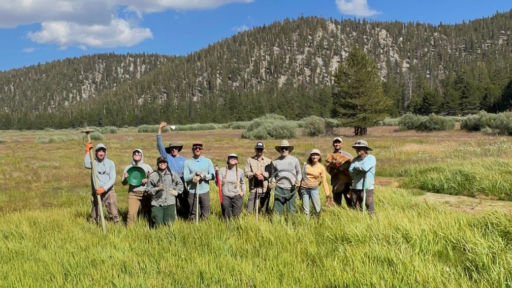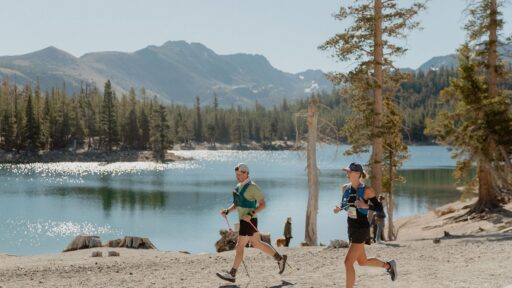



Payahuunadu has been, and continues to be, the homeland of the Paiute (Nuumu), Shoshone (Newe), and Timbisha peoples. This land acknowledgment honors the original inhabitants of the Eastern Sierra and the tribes who remain here today.
Mt. Whitney Mountaineer’s Route Trail Guide
The Mountaineer’s Route is John Muir’s original line to the summit of Mt. Whitney, and it’s as raw and challenging today as it was in 1873. With steep scree, exposed ledges, and the infamous Final 400, this route is for climbers with experience in route-finding, Class 3 scrambling, and high-altitude travel. At roughly 10.6 miles round trip with 6,000 feet of elevation gain, the route is shorter than the main Whitney Trail but far more technical. Permits are required for both day and overnight ascents and hiring a guide is suggested if you lack solid mountaineering experience, as this route takes lives every year.
Mileage & Elevation
| Section | Mileage (mi) | Elevation (ft) | Section Gain (ft) |
|---|---|---|---|
| Mt. Whitney Trailhead | ~0.0 | ~8,360 | 0 |
| North Fork Split | ~0.8 | ~8,500 | ~140′ |
| Ebersbacher Ledges | ~1.1 | ~9,700 | ~600′ |
| Lower Boy Scout Lake | ~2.5 | ~10,300 | ~600′ |
| Upper Boy Scout Lake | ~3.5 | ~11,250 | ~950′ |
| Iceberg Lake | ~4.6 | ~12,600 | ~1350′ |
| The Notch | ~5.25 | ~14,128 | ~1528′ |
| Final 400 | ~5.3 | ~14,400 | ~400′ |
| Summit (Mt. Whitney) | ~5.33 | ~14,505 |
Route Overview
Mt. Whitney Trailhead (0.0 mi | 8,360 ft)

Start at Whitney Portal, where the route begins along the main Whitney Trail. It’s well-maintained, but pay attention—your turnoff comes quickly.
North Fork Split (0.8 mi | 8,500 ft)

Look for a signed junction and a use trail that veers off to the right toward the North Fork of Lone Pine Creek. The terrain gets rugged almost immediately, with creek crossings and boulder-hopping.
Ebersbacher Ledges (1.1 mi | 9,600–9,800 ft)

A famous and exposed traverse of granite slabs. Route-finding is essential here, especially in low light or early season snow. Ice is very dangerous. This is often the first major challenge.
Lower Boy Scout Lake (2.5 mi | 10,300 ft)

A common overnight camp with flat tent spots and excellent views. The approach includes steep, loose trail sections and some scrambling.
Upper Boy Scout Lake (3.5 mi | 11,250 ft)

The route steepens on the way to Upper Boy Scout. This lake is another prime camp spot and the last semi-reliable water source before Iceberg Lake.
Iceberg Lake (4.6 mi | 12,600 ft)

The staging area for summit attempts. The surrounding walls are massive, and the steep chute to the Notch rises directly above the lake.
Chute to Notch (5.25 mi | 14,128 ft)

A steep, scree-filled chute leads to this narrow gap below the summit plateau. From here, the Final 400—a Class 3 rock scramble—waits.
Final 400 (5.3 mi | ~14,400 ft)

The last push to the summit is a Class 3 scramble up 400 vertical feet of granite. It’s steep, exposed, and demands careful hand-and-foot placements. Rockfall is common here, so helmets are a must. In icy conditions, this section can require technical climbing skills.
Summit (5.33 mi | 14,505 ft)

The highest point in the lower 48. You made it, but remember: you’re only halfway. The descent can be as challenging as the climb.
Best Season
Late June through September is the most common window for a snow-free climb. Spring and winter require full alpine gear including crampons, ice axe, and helmet and winter alpine experience. Regardless of the season, start early to avoid thunderstorms and rockfall. Do not attempt this route without proper experience.
Know Before You Go
This is a technical route requiring experience, preparation, and the ability to navigate unmarked terrain. Acclimatize before attempting the climb. Helmets are strongly recommended, as loose rock is common on the chute and Final 400. Always go with an experienced partner or hire a guide.
Driving Directions
From Lone Pine, take Whitney Portal Road for 13 miles to the parking area at Whitney Portal. The Mountaineer’s Route starts on the same trail as the Mt. Whitney Main Trail.
Parking
Parking is limited at Whitney Portal, especially during summer weekends. Arrive early and display your permit.
Last but not Least: Leave No Trace
Mt. Whitney is a high-use, sensitive alpine environment. All hikers and climbers are required to pack out their human waste using WAG bags, which are issued with your permit. There are no facilities on the Mountaineer’s Route. Follow strict Leave No Trace principles—pack out all trash, avoid creating new campsites, and minimize your impact on fragile alpine vegetation.
AWE Disclaimer
Recreation activities may involve inherent risks, including but not limited to changing weather conditions, challenging terrain, wildlife encounters, and other unforeseen hazards. Visitors should check with local land management agencies or authorities for up-to-date information on trail conditions, access, permits, and regulations before planning their trip. Always prioritize safety by being prepared, carrying adequate supplies, and following Leave No Trace principles to protect the environment. Respect local rules, private property, and other visitors. This post is for informational purposes only, and participation in any activity is at your own risk.