

Most people know Mammoth for skiing.
Climbers know it for summer.
By July, when much of California is baking under triple-digit temperatures, Mammoth is settling into long days, cool mornings, and perfect climbing weather. Granite walls emerge from the last patches of snow. Afternoon thunderstorms build over the Sierra crest. Climbers drift between coffee shops, crags, and alpine lakes, chasing shade, sun, and whatever route has been living rent-free in their head all winter.
Within an hour of town, you’ll find steep volcanic sport climbing, classic Sierra trad routes, alpine objectives, and enough bouldering to fill an entire season.
Not bad for a ski town.
Clark Canyon
Just north of Mammoth, Clark Canyon is where many climbers start and plenty never leave.
The climbing here is steep, pocketed, and unapologetically physical. Volcanic tuff walls rise from the sagebrush, riddled with routes that range from friendly introductions to full-value projects.
The approaches are short. The climbing is good. The views stretch across the Long Valley Caldera.
Classic routes include:
- Wild Will’s Arete (5.8)
- Borrowing From Tradition (5.10b)
- Pull My Finger (5.10a, 3 pitches)
- Driller Instinct (5.10d)
If Mammoth has a living room for climbers, Clark Canyon is probably it.
Crystal Crag
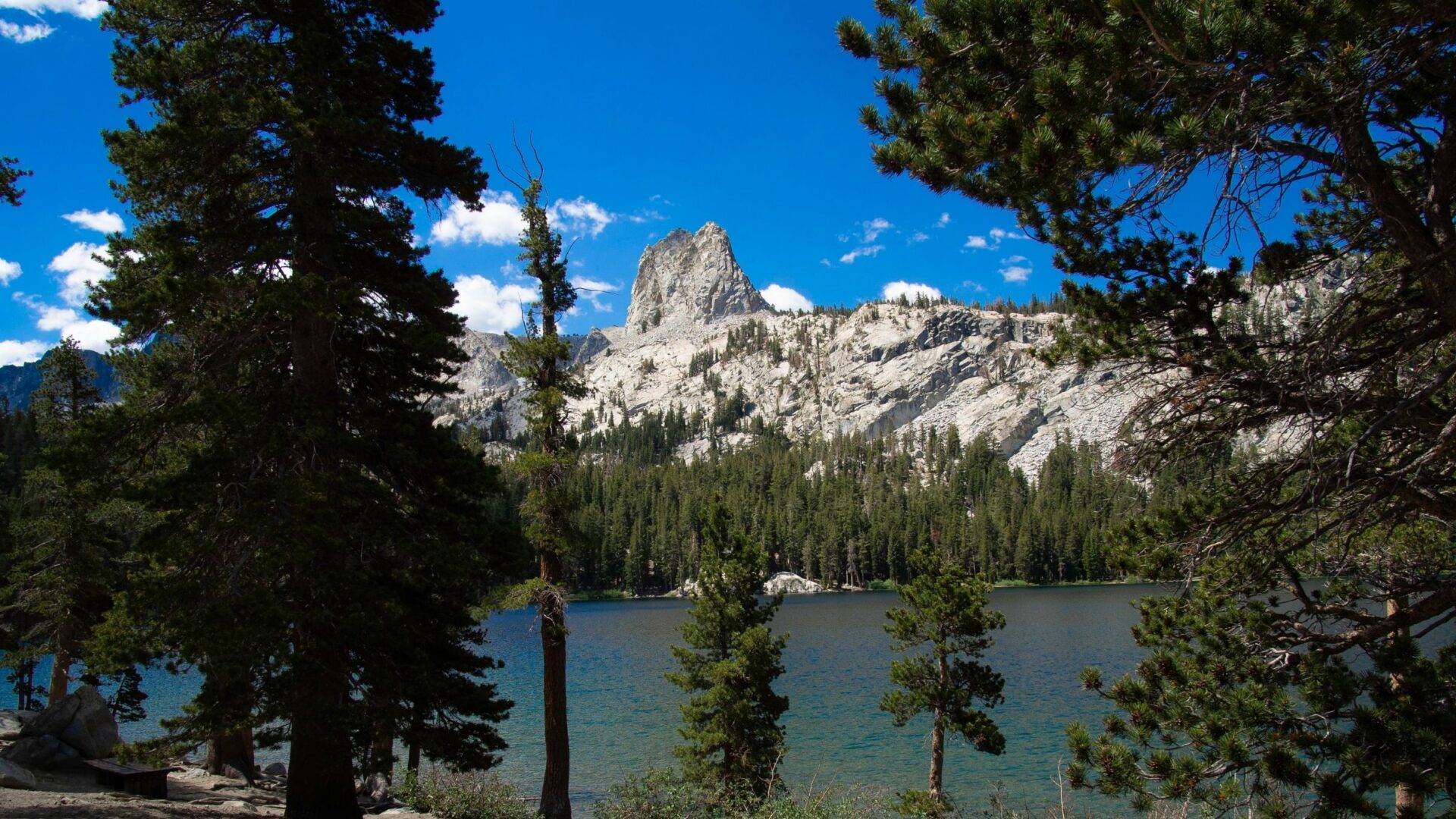
There’s a reason Crystal Crag appears in so many Mammoth photos.
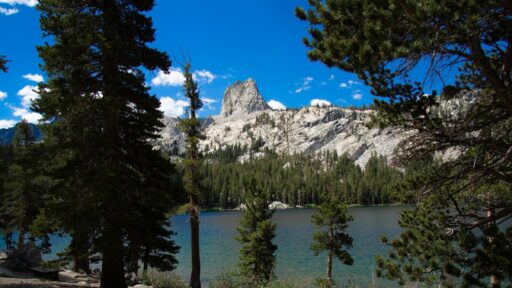
Rising above Lake George, the granite formation anchors the Mammoth Lakes Basin and offers one of the most aesthetic climbing objectives in the region. The climbing feels distinctly Sierra. Clean granite, airy positions, and a summit view that makes it easy to linger longer than planned.
Classic routes include:
- Springbank (5.10a)
- Cromagnon (5.10a/b)
- Black Lassie (5.10d)
The approach takes some effort. Nobody seems to mind.
Rock Creek
South of Mammoth, Rock Creek delivers the kind of climbing that keeps people coming back year after year.
The canyon winds through granite walls, alpine meadows, and high-country terrain that feels a world away from the highway below. Trad climbers, sport climbers, and boulderers all find something here.
Classic routes include:
- Modern Trad (5.10a)
- Sons of Liberty (5.10d)
- Boi-oi-oi-ing! (5.10a, 3 pitches)
- Wages of Skin (5.10+)
- Sideshow (5.10a)
- He She (5.10b)
- Anything Goes (5.12a)
For boulderers, Weapon of Choice (V4) remains one of the area’s best-known problems.
Bring an extra day. Rock Creek has a habit of extending trips.
Owens River Gorge
About thirty minutes from Mammoth, the Owens River Gorge cuts a dramatic scar through the volcanic landscape east of the Sierra.
Hundreds of sport routes line the canyon walls, making it one of California’s most significant sport climbing destinations. The climbing is technical, varied, and surprisingly accessible once you’re willing to hike into the gorge.
The descent can feel long at the end of the day.
The climbing usually makes up for it.
Bouldering Around Mammoth
Bishop may get most of the attention, but Mammoth quietly holds its own.
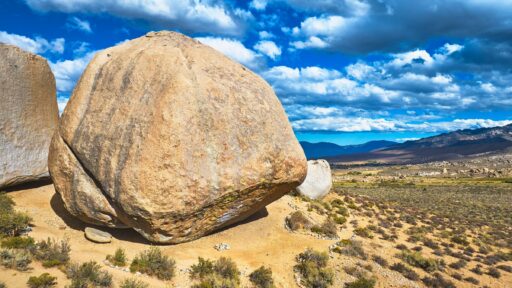
Granite and volcanic boulders are scattered throughout the forests and high country, often tucked beneath lodgepole pines or hidden among glacially carved terrain. Summer temperatures make Mammoth particularly appealing when lower-elevation bouldering areas become too hot.
Many locals simply climb both and call it a good life.
When to Go
One of Mammoth’s greatest strengths is that climbing season feels unusually long.
Spring brings ideal temperatures to Clark Canyon. Summer opens access to Crystal Crag, Rock Creek, and higher alpine objectives. Fall often delivers the best conditions of the year, with cool temperatures and stable weather. Even winter offers opportunities when the sun is out and the snow stays away from lower-elevation crags.
There are worse places to spend a season.
Leave It Better
The climbing around Mammoth Lakes exists because generations of climbers helped protect it. Stay on established trails. Respect seasonal closures. Pack out your trash. Avoid trampling fragile alpine vegetation. Give other climbers space.